
Zimbabwe Sees First Single-Digit Inflation in Over Two Decades
Zimbabwe’s Inflation Falls to Single Digits as ZiG Currency Gains Stability
Zimbabwe’s economy is showing early signs of stabilization, marked by a sharp slowdown in inflation and renewed confidence in its gold-backed local currency.
The development represents a significant milestone for a country that has grappled with currency instability and hyperinflation for more than two decades.
In November last year, the Confederation of Zimbabwe Industries (CZI) projected a substantial decline in annual inflation by the end of 2025, forecasting a 50% reduction as tighter monetary controls took effect.
At the time, CZI data showed annual inflation—measured in the Zimbabwe Gold (ZiG) currency had dropped sharply to 32.7% in October from 82.7% in September.
Recent data now point to an even more notable improvement. According to reports cited by Bulawayo24News, Zimbabwe recorded its first single-digit local-currency inflation rate in more than 20 years, with ZiG inflation falling to 4.1% in January, down from 15% in December and 19% in November. Economists view this as a critical turning point for the country’s economic trajectory.
Analysts attribute the decline to stricter monetary policy, improved supply chain conditions, and relative stability in the foreign exchange market. These factors have helped ease price pressures and could contribute to a gradual restoration of consumer and investor confidence.
Zimbabwe last experienced comparable inflation stability in 2018, when local prices were effectively pegged to the US dollar. Since then, the country has struggled to establish a functional national currency following repeated episodes of hyperinflation that eroded savings and led to the adoption of the US dollar in 2009.
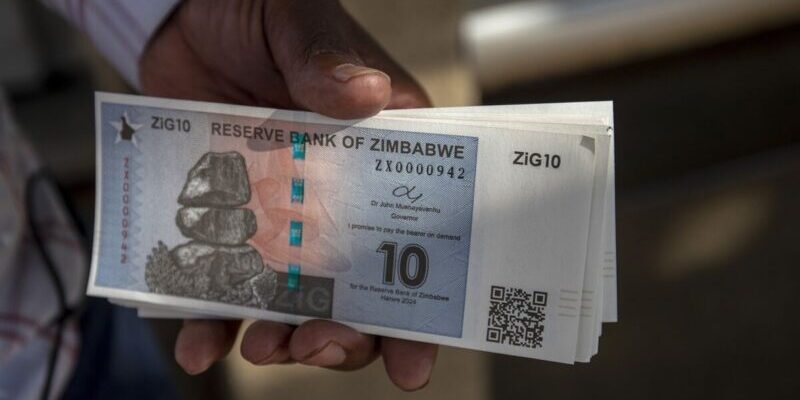
The ZiG short for Zimbabwe Gold was introduced in April 2024 as the government’s latest attempt to restore monetary stability. Partially backed by gold reserves, the currency now accounts for nearly 40% of daily transactions.
According to Oxford Economics, the ZiG has remained relatively stable in official markets, trading at a parallel-market premium of around 20%.
Persistently high global gold prices have also supported the currency’s credibility. Gold output is expected to surpass the record 38.4 tonnes achieved in 2024, further strengthening Zimbabwe’s external position.
The easing of inflationary pressures has coincided with renewed foreign interest in Zimbabwe’s capital markets. Data from the Zimbabwe Stock Exchange (ZSE) show that foreign participation rose to 26.53% of total trading activity in the second quarter of 2025, up from 15.39% in the previous quarter, reflecting growing investor confidence in the country’s improving macroeconomic fundamentals.
While economists caution that sustained discipline will be essential, Zimbabwe’s recent inflation performance signals a modest but meaningful return to stability.
A prolonged period of price moderation will be critical to supporting broader economic recovery and rebuilding trust in the local currency.